03  /  Consequences

Negative impacts and their consequences

Impact 01

Australia’s 133 million hectares of forests function as a massive carbon sink, holding about 19 billion tonnes of carbon dioxide. This stored carbon is being released at an alarming rate due to rapid deforestation; roughly 55 million tonnes per year, accelerated by the industries that replace these forests.

Short-term consequences:

  • CO₂ emissions cause health risks to people nearby.
  • Regional weather becomes more extreme, with heavier rainfall and more intense heatwaves.

Long-term consequences:

  • Persistent CO₂ release amplifies the greenhouse effect.
  • Global temperatures rise.
  • Ice caps melt and sea levels increase.
  • Ecosystems worldwide become destabilised.
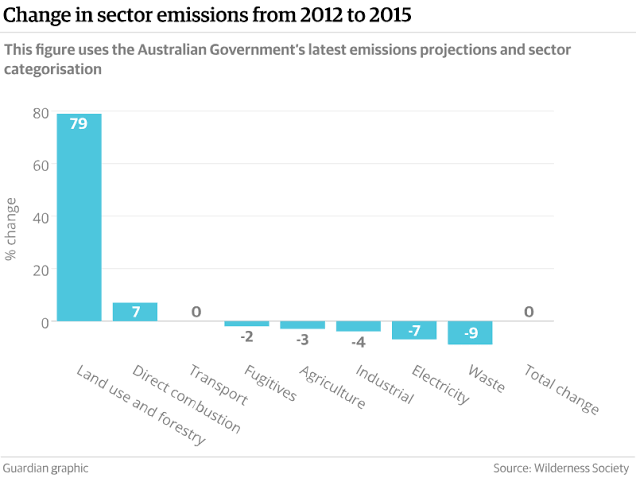
Bar chart of change in sector emissions, showing land use and forestry rising far more steeply than other sectors.
Figure 03 Graph of CO₂ emissions from land clearing
Impact 02

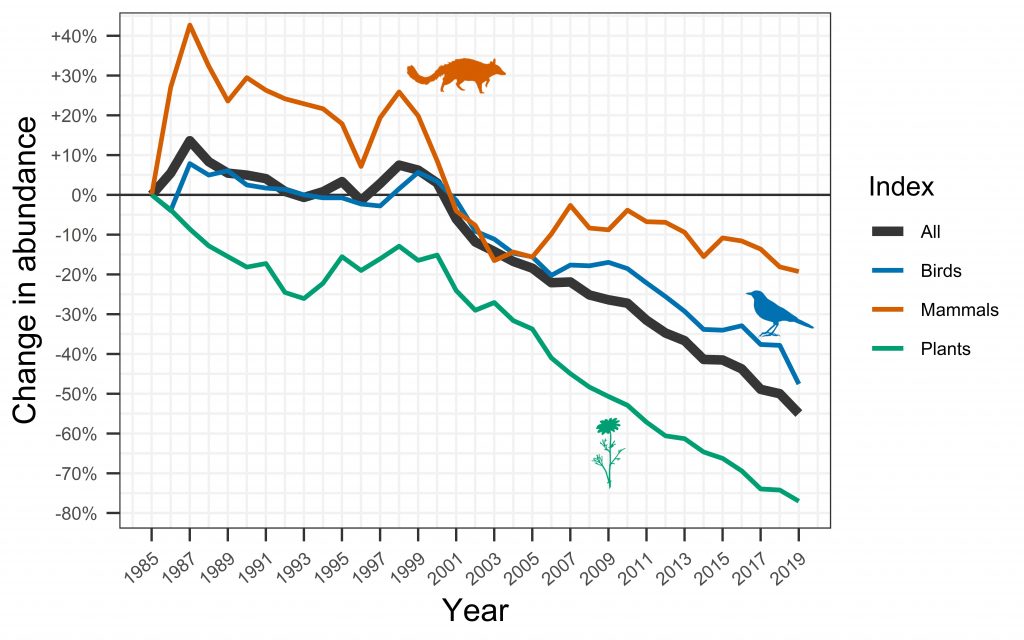
Deforestation also displaces millions of native animals per year, destroying habitats, food sources, and intricate ecosystems.

Short-term consequences:

  • Animals struggle to survive outside their natural habitats.
  • Predation increases as animals move into unfamiliar environments.

Long-term consequences:

  • Population decline and loss of genetic diversity.
  • Local extinctions.
  • Ecosystem collapse through domino‑effect species loss.
Line graph of change in species abundance from 1985 onwards, with birds, mammals and plants all trending downward.
Figure 04 Infographic of species decline